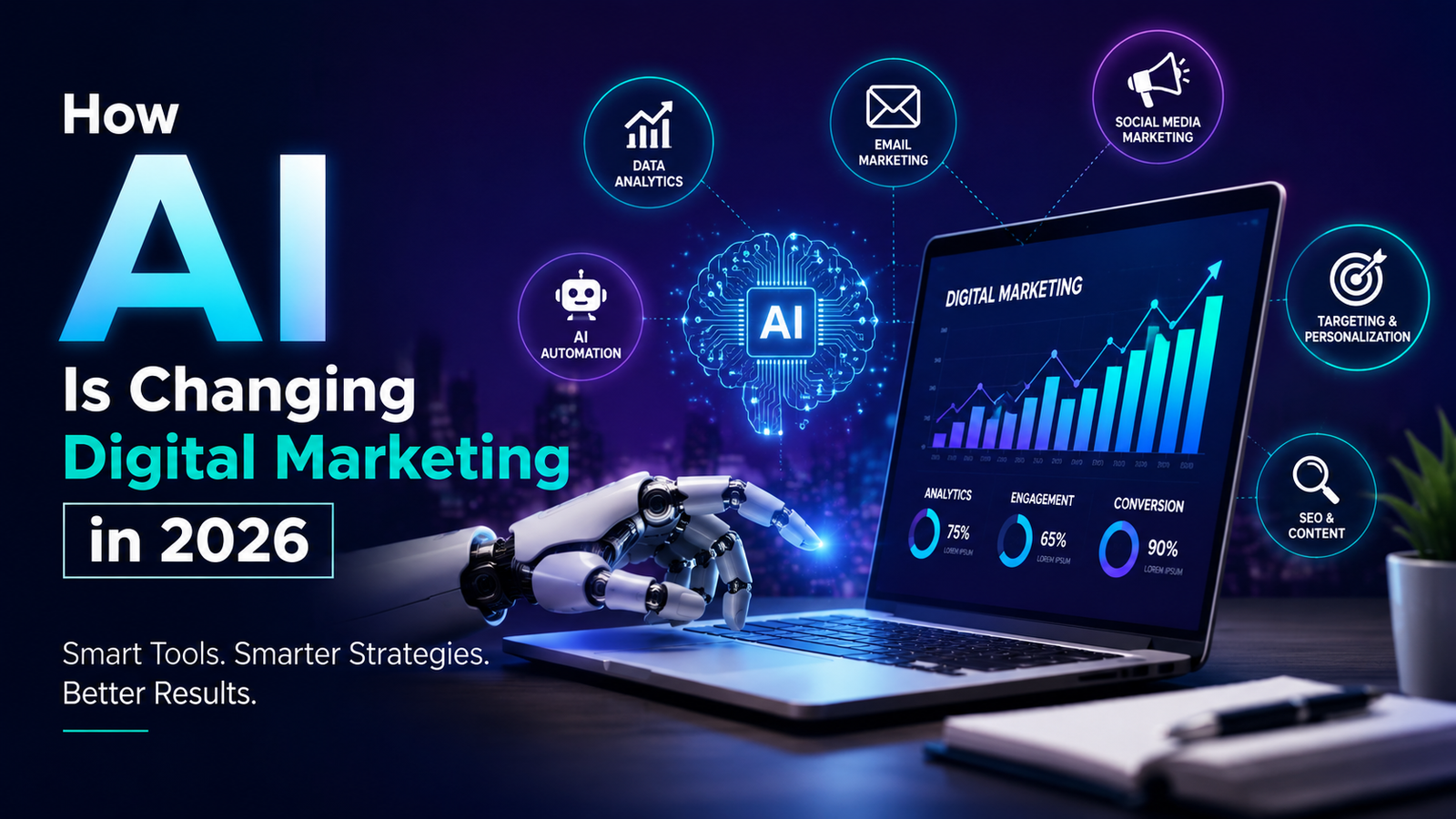
Digital marketing has changed a lot in the last few years. Earlier, marketers mainly focused on social media posts, SEO, Google Ads, email marketing, and creating content manually. But now, Artificial Intelligence (AI) has become an important part of digital marketing.
In 2026, AI is not just a technology that sounds futuristic. It is already being used by marketers and businesses to understand customers, create content, analyze data, improve advertisements, and save time.
The biggest change is that digital marketers no longer have to do everything manually. AI can help with repetitive tasks and provide useful insights, while marketers can focus more on creativity, strategy, and understanding their audience.
However, AI does not mean that humans are no longer needed. In fact, the best digital marketing strategies in 2026 are likely to combine AI technology with human creativity and decision-making.
So, how exactly is AI changing digital marketing in 2026? Let’s understand it.
AI is changing digital marketing by making marketing activities faster, smarter, and more personalized. It can help marketers create content ideas, analyze customer behavior, improve SEO strategies, optimize advertisements, automate emails, and understand campaign performance.
AI can also help businesses show the right content to the right audience at the right time. This can improve the overall customer experience.
But marketers should not completely depend on AI. AI-generated content can sometimes feel repetitive or lack a human touch. Therefore, human creativity, emotions, originality, and strategy are still very important.
The future of digital marketing is not simply AI vs humans. It is about AI + humans working together.
Content is one of the most important parts of digital marketing. Businesses need blogs, social media posts, captions, ad copies, email content, video ideas, and many other types of content.
Creating all this content manually can take a lot of time. AI can make this process much faster.
For example, a marketer can use AI to generate blog ideas, create content outlines, suggest captions, write different ad copy variations, or brainstorm video topics.
But this does not mean marketers should simply copy and paste whatever AI generates.
A good marketer still needs to check the content, add personal ideas, understand the target audience, and make the content sound natural.
AI can help with the first draft, but the human touch makes the content more interesting and relatable.
SEO is also changing because of AI.
Earlier, SEO mainly focused on keywords, backlinks, technical optimization, and ranking pages on search engines. These things are still important, but search behavior is becoming more conversational.
People are asking longer and more specific questions instead of searching only for short keywords.
For example, instead of searching:
“Digital marketing course”
a person may search:
AI can help marketers understand these types of searches and create content that answers real questions.
AI tools can also help with keyword research, content ideas, competitor analysis, and finding gaps in existing content.
However, simply adding keywords is not enough. Content needs to provide genuine value and answer what the user actually wants to know.

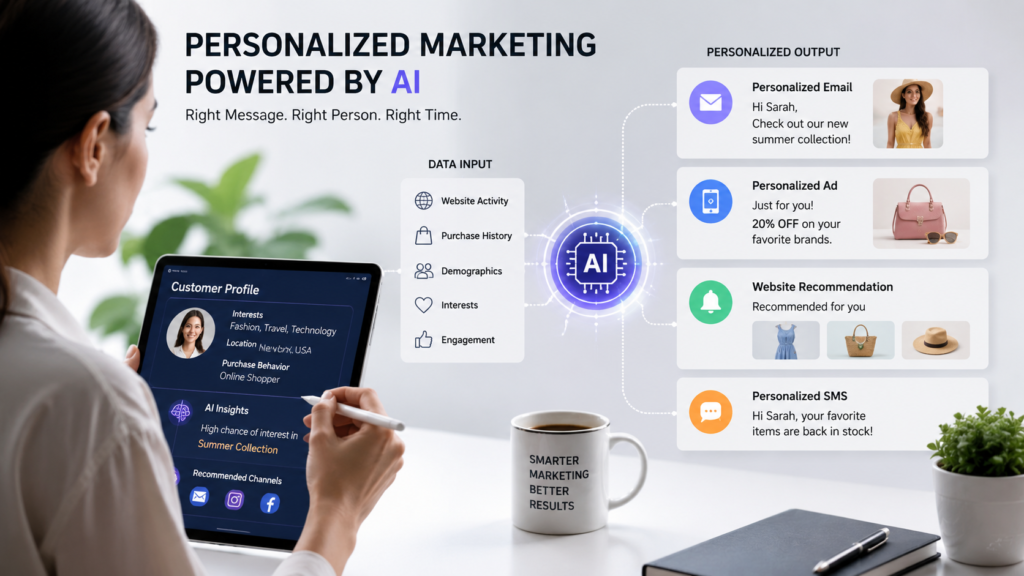
This is an example of how digital marketing uses customer data and technology to provide more relevant experiences.
AI can analyze customer behavior, interests, previous interactions, and preferences. Based on this information, businesses can create more personalized marketing campaigns.
For example, an online clothing store can show different recommendations to different customers based on their previous browsing or shopping behavior.
Personalization can make marketing more relevant because customers are more likely to notice content that matches their interests.
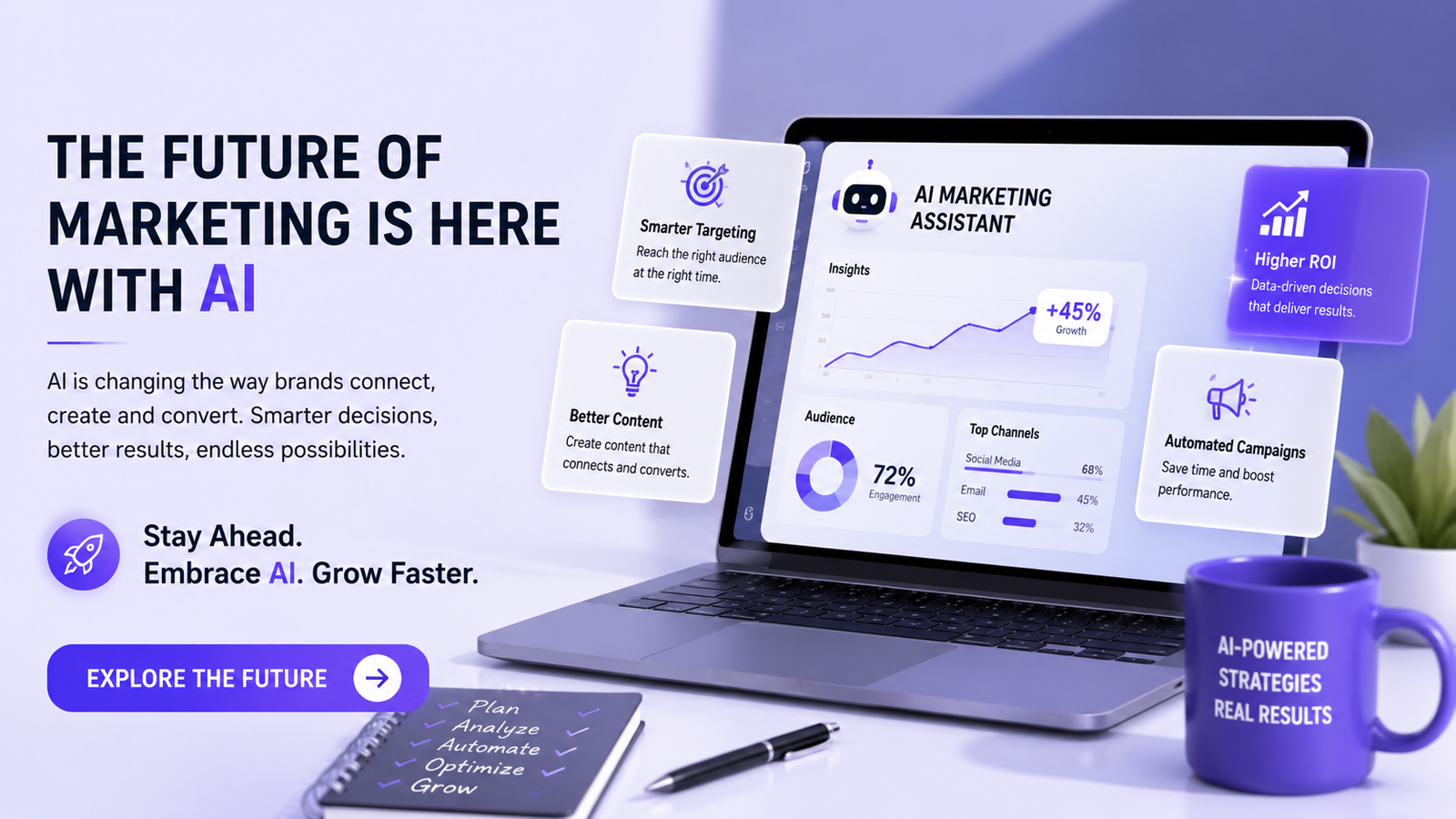
Paid advertising is another area where AI is becoming very useful.
Platforms such as Google Ads and social media advertising platforms use automation and machine learning to help advertisers optimize campaigns.
AI can analyze large amounts of campaign data and identify patterns that may be difficult to notice manually.
For digital marketers, this means they need to understand more than just how to create an advertisement. They also need to understand audience targeting, campaign goals, creative testing, conversions, and performance data.
For example, a marketer may create multiple versions of an advertisement with different headlines and images. AI-powered systems can help identify which combinations perform better.
Still, marketers have to decide what message the brand should communicate and who the target audience should be.
Social media is changing quickly, and AI is becoming a useful tool for social media marketers.
AI can help marketers find content ideas, understand trends, generate captions, create content calendars, and analyze performance.
For example, if a brand wants to create Instagram Reels, AI can help brainstorm different hooks, topics, and content ideas.
But trends alone do not guarantee success.
A brand still needs to understand its audience and create content that feels authentic. People can easily recognize when content feels completely automated or copied.
This is why creativity and personality are becoming even more important in social media marketing.
One of the biggest questions in digital marketing is whether AI will replace digital marketers.
I don’t think the future is simply about replacing humans with AI.
AI can generate content, analyze data, and automate tasks, but it does not completely understand human emotions, personal experiences, or brand identity in the same way a human does.
For example, AI can suggest ten Instagram captions, but a human marketer has to decide which one actually matches the brand’s personality.
Creativity, storytelling, communication, empathy, and strategic thinking will continue to be valuable skills.
Instead of competing with AI, digital marketers should learn how to use it as a tool.
AI is clearly changing digital marketing in 2026. From content creation and SEO to advertising, social media, email marketing, analytics, and customer support, AI is becoming a useful part of the digital marketing process.
The biggest advantage of AI is that it can save time, analyze information quickly, and help marketers make smarter decisions.
But AI should not be treated as a complete replacement for human marketers. The best results come when technology and human creativity work together.
For anyone learning digital marketing today, understanding AI is becoming an important skill. You don’t need to become an AI expert, but you should know how AI can be used to improve your marketing work.
The future belongs to marketers who can combine technology, creativity, strategy, and human understanding.
Are you learning digital marketing or planning to start your career in this field?
Don’t wait for the future to learn AI. Start exploring AI tools, experiment with content creation, analyze marketing data, and understand how AI can improve your everyday marketing tasks.
Learn digital marketing, learn AI, and stay ready for the future of marketing. 🚀
Follow the latest digital marketing trends and keep learning—because in 2026, the best marketer is not the one who works the hardest, but the one who knows how to work smarter.