Gen Z Travel Trends in 2026:
Introduction
Gen Z travel trends are changing the way young people travel in 2026.. Instead of planning one long holiday every year, many young travellers are choosing shorter, more flexible and experience-focused trips. They want their travel to feel personal and different from traditional vacations.
Technology, social media, affordability and the desire for unique experiences are also influencing how Gen Z chooses destinations and plans trips. Recent travel research shows that young Indian travellers are increasingly interested in short getaways, personalised experiences and flexible itineraries.
Table of Contents
What Are Gen Z Travel Trends?
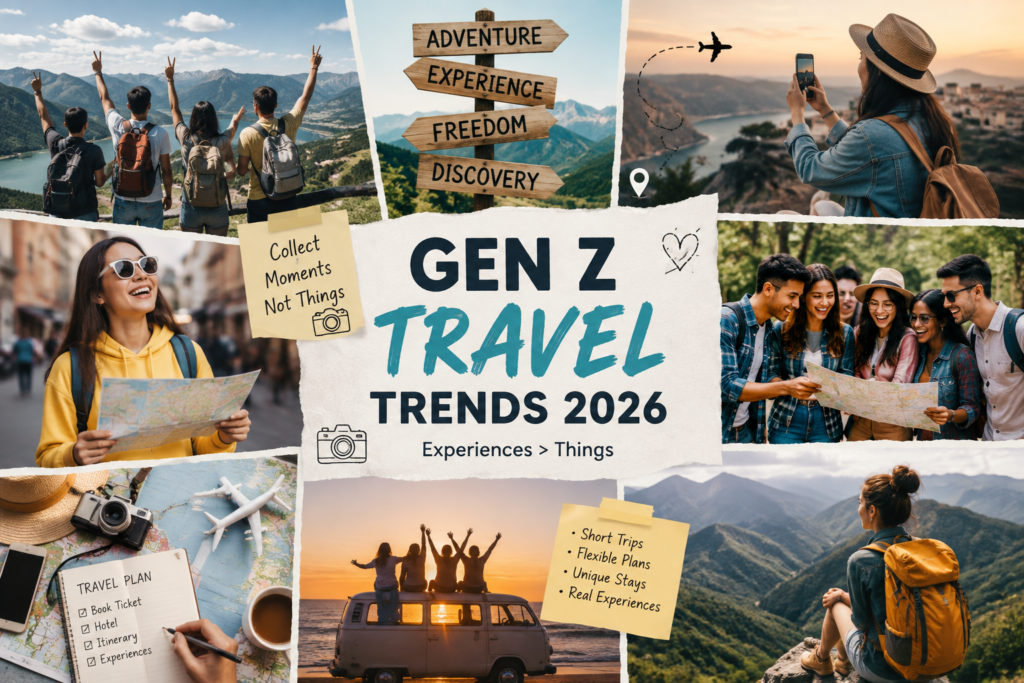
Gen Z travel trends refer to the changing travel habits and preferences of young travellers. This generation often looks beyond traditional sightseeing and wants travel experiences that match their personality and interests.
For Gen Z, a good trip can be a short weekend getaway, a food experience, a music festival, a nature trip or simply spending time with friends in a new place.
Top Gen Z Travel Trends in 2026
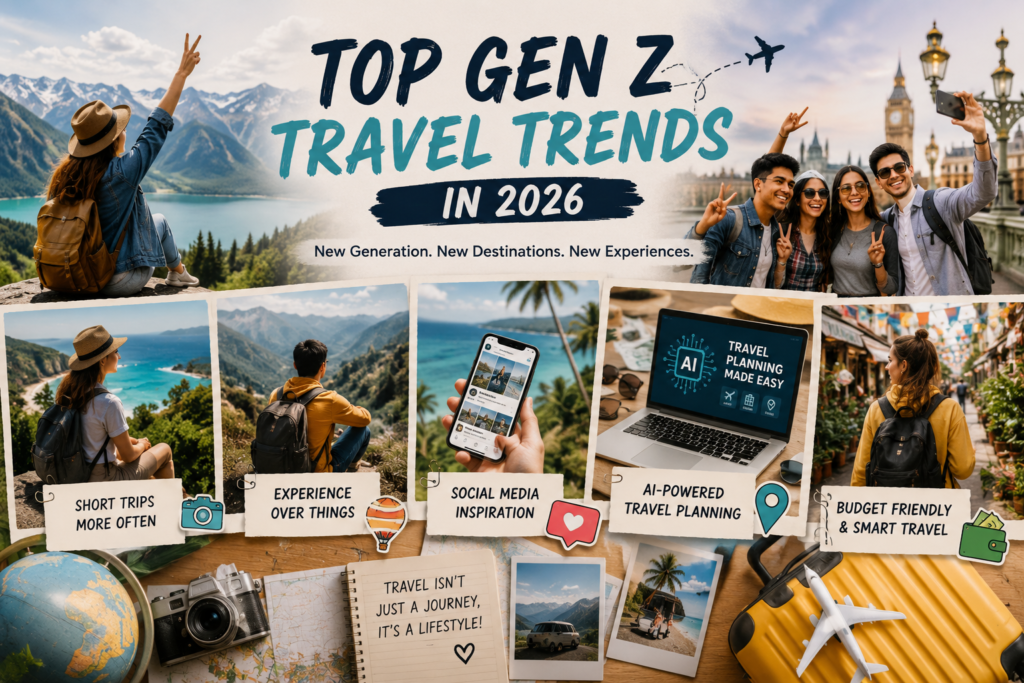
1. Short Trips Instead of Long Vacations
One of the biggest Gen Z travel trends in 2026 is the popularity of short trips.
Instead of waiting for one long annual vacation, young travellers are choosing multiple shorter getaways. Airbnb’s 2026 India research found that 7 in 10 Gen Z travellers would prefer three short trips over one long annual holiday.
Short trips can also be easier to fit around college, work and other responsibilities.
2. Personalised Travel Experiences
Gen Z wants travel to feel personal. They are not always interested in following the same popular tourist itinerary.
Many young travellers want to discover places that match their interests, personality and lifestyle. Airbnb reported that 95% of surveyed Gen Z travellers in India said it was important for their trip to feel personal and unique.
3. Flexible and Spontaneous Travel
Another important trend is flexible travel planning.
Many young travellers do not want every minute of their trip planned in advance. They may leave some free time to explore a destination naturally.
According to Airbnb’s India research, 64% of Gen Z travellers deliberately leave parts of their itinerary unplanned.
This gives travellers more freedom to change their plans depending on their mood and interests.
4. Social Media as Travel Inspiration
Social media plays an important role in how young people discover travel destinations.
Instagram and YouTube are among the popular sources of travel inspiration for Gen Z in India. Young travellers can discover destinations, restaurants, activities and travel ideas through short videos and creator content.
However, Gen Z is not only interested in viral places. Recent Airbnb research found that 90% of surveyed Gen Z travellers actively seek places that have not gone viral or been widely recommended online.
5. Budget-Friendly Travel
Money is another major factor in Gen Z travel trends.
Young travellers often compare prices and look for ways to make their trips more affordable. They may choose budget accommodation, shorter trips, local transportation or less-touristy destinations.
Skyscanner’s 2026 research found that many young Indian travellers are making financial trade-offs to afford travel, including choosing budget stays and shorter trips.
AI Is Changing Travel Planning
Technology is becoming an important part of modern travel planning.
Gen Z travellers can use AI tools to research destinations, create itineraries, compare options and discover activities. Skyscanner reported that 87% of Gen Z in India surveyed felt confident using AI to help plan and book trips.
This makes travel planning faster and more personalised.
For example, a traveller can ask an AI tool to suggest a three-day itinerary based on a specific budget and interests.
Experience Over Traditional Sightseeing
For many young travellers, the experience is more important than simply visiting famous attractions.
Gen Z may prefer activities such as:
- Trying local food
- Attending concerts and festivals
- Exploring nature
- Visiting local markets
- Meeting new people
- Discovering local culture
- Trying adventure activities
Music is also becoming a major travel motivator. Airbnb reported that 62% of India’s Gen Z planned to travel for concerts and music festivals in 2026.
Sustainable and Responsible Travel
Sustainability is also becoming part of the travel conversation.
Some young travellers are looking for ways to reduce their environmental impact by using public transportation, supporting local businesses and choosing responsible travel experiences.
Sustainable travel does not have to mean giving up enjoyable experiences. Small choices can make a difference while travelling.
Wellness and Slow Travel
Another growing trend is choosing calm and relaxing experiences instead of constantly following a busy itinerary.
Nature trips, slow travel, wellness activities and simply taking time to rest can be attractive to young travellers.
Airbnb’s 2026 India research found that nature and slow travel were the top activity preference among surveyed Gen Z travellers.
This shows that travel is increasingly being used not only for sightseeing but also for relaxation and personal well-being.
How Gen Z Chooses a Travel Destination
Before selecting a destination, young travellers may consider several factors:
Cost
Is the destination affordable?
Experience
Are there interesting activities to do?
Flexibility
Can the trip be planned according to their schedule?
Social Media Inspiration
Can they discover interesting places and ideas online?
Uniqueness
Does the destination offer something different from common tourist spots?
Accessibility
Is the destination easy to reach?
These factors are helping create a new style of travel that is more flexible and personalised.
The Future of Gen Z Travel
The future of Gen Z travel trends is likely to focus on flexibility, technology, affordability and unique experiences.
Young travellers are already changing traditional travel habits by taking shorter trips, using AI for planning, discovering destinations through social media and looking for experiences that feel personal.
As technology and travel continue to evolve, Gen Z will likely continue influencing how destinations, hotels and travel companies design experiences for younger travellers.
Conclusion
Gen Z travel trends in 2026 show that young travellers are looking for more than traditional vacations. They want affordable trips, flexible schedules, personalised experiences and memorable activities.
Short getaways, social media inspiration, AI travel planning, budget-friendly choices, slow travel and experience-led trips are all becoming important parts of modern travel.
For Gen Z, travel is not just about visiting a destination. It is about creating experiences that match their interests, personality and lifestyle.